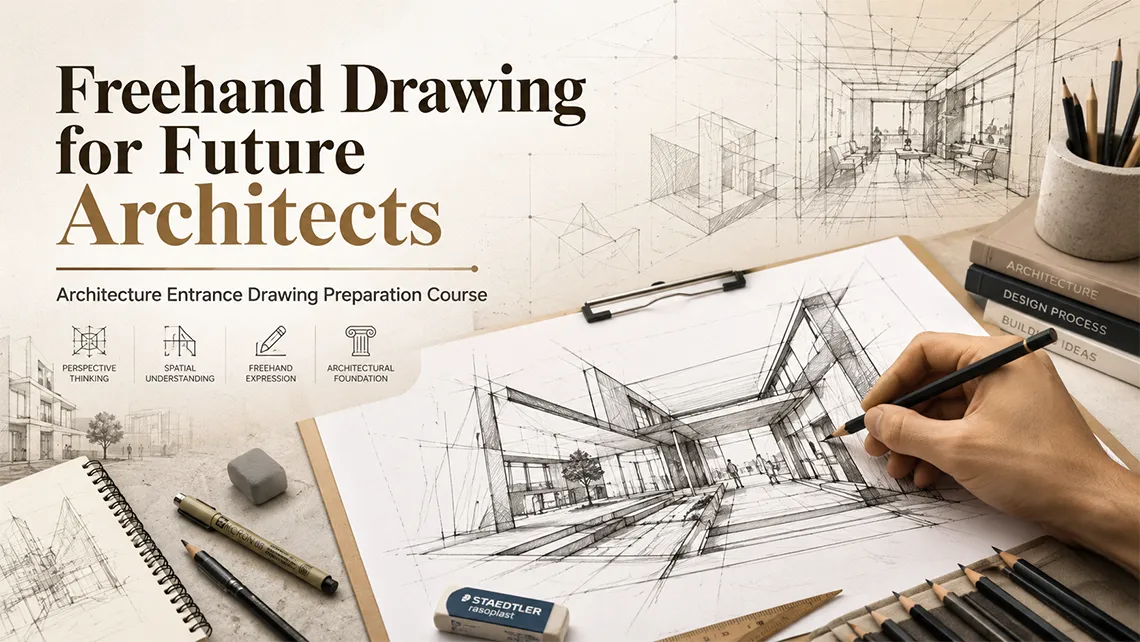
Freehand Drawing for Future Architects - Training Course
A practical drawing course at ETC Lebanon for students preparing for architecture university entrance exams. Master freehand sketching, perspective, proportion, spatial imagination, and timed exam techniques through professional hands-on training.
Duration: 30 hours
Teaching Methodology: Hands-on
Course Schedule: Schedule
Fees: $300
Course Mode: Blended - Face-to-face or online via Zoom
 |
 |
 |
 |
DESCRIPTION
This freehand drawing course prepares future architecture students for university entrance exams. It covers observation, proportion, perspective drawing, interior and exterior architectural sketching, rendering techniques, creativity under time pressure, and full mock exam practice with individual feedback.
AUDIENCE
High school and pre-university students planning to apply to architecture programs who need to develop strong freehand drawing and spatial imagination skills.
PREREQUISITES
No prior drawing experience is required. An interest in architecture and a willingness to practice regularly are all you need to get started.
COURSE CONTENTS
01 - Introduction to Architectural Freehand Drawing
- What Is Freehand Drawing for Architecture?
- Difference Between Fine Art Drawing and Architectural Drawing
- Why Architects Need Drawing Skills
- Drawing as a Tool for Thinking and Communication
- Common Architecture Entrance Exam Requirements
- Required Drawing Materials
- How to Build a Daily Sketching Habit
02 - Drawing Tools and Basic Techniques
- Pencils, Pens, Markers, Erasers, and Paper Types
- How to Hold the Pencil Correctly
- Line Weight and Line Quality
- Light Lines, Construction Lines, and Final Lines
- Contour Drawing
- Hatching, Cross-Hatching, and Tonal Shading
- Clean Presentation and Page Layout
03 - Observation and Proportion
- How to Observe Like an Architect
- Measuring Proportions by Eye
- Comparing Height, Width, and Angles
- Negative Space Drawing
- Drawing Objects from Observation
- Avoiding Common Proportion Mistakes
- Accuracy vs. Expression
04 - Basic Forms and Volume
- Understanding 2D and 3D Shapes
- Drawing Cubes, Cylinders, Cones, and Spheres
- Combining Basic Forms
- Drawing Objects as Simple Volumes
- Light Direction and Shadow
- Cast Shadows and Form Shadows
- Creating Depth Using Tonal Values
05 - Perspective Drawing Fundamentals
- What Is Perspective?
- Horizon Line and Eye Level
- Vanishing Points
- One-Point Perspective
- Two-Point Perspective
- Three-Point Perspective Introduction
- Common Perspective Errors
- Using Perspective Without a Ruler
06 - Interior Space Drawing
- Understanding Interior Spaces
- Drawing Rooms in One-Point Perspective
- Drawing Furniture in Perspective
- Doors, Windows, Floors, and Ceilings
- Stairs and Levels
- Light and Shadow in Interiors
- Creating a Balanced Interior Composition
07 - Exterior Architectural Sketching
- Drawing Building Facades
- Windows, Doors, Balconies, and Roofs
- Drawing Houses and Villas
- Drawing Public Buildings
- Street Views and Urban Corners
- Trees, People, Cars, and Context
- Creating Depth in Exterior Scenes
08 - Composition and Page Organization
- What Makes a Strong Drawing Composition?
- Balance, Focus, and Visual Hierarchy
- Foreground, Middle Ground, and Background
- Cropping and Framing
- Organizing the Drawing Page
- Adding Notes, Titles, and Labels
- Presentation for Entrance Exams
09 - Creativity and Architectural Imagination
- Drawing from Imagination
- Transforming Simple Forms into Buildings
- Designing a Small Space
- Concept Sketching
- Visual Storytelling in Architecture
- Creativity Under Time Pressure
- Developing Original Ideas
10 - Human Scale, Landscape, and Environment
- Why Scale Matters in Architecture
- Drawing Simple Human Figures
- Drawing People in Perspective
- Trees, Plants, and Natural Elements
- Cars, Benches, Streetlights, and Urban Details
- Using Context to Improve Architectural Drawings
- Making a Scene Look Alive
11 - Rendering Techniques
- Pencil Rendering
- Ink Drawing Techniques
- Marker Rendering Basics
- Simple Watercolor for Architecture
- Texture: Wood, Stone, Glass, Metal, Concrete
- Light, Shadow, and Contrast
- Fast Rendering for Exams
12 - Entrance Exam Preparation
- Understanding the Exam Format
- Typical Drawing Exam Questions
- Time Management During the Exam
- How to Analyze the Question
- Planning Before Drawing
- Common Mistakes in Architecture Entrance Exams
- How Drawings Are Usually Evaluated
- Building Confidence Before the Exam
13 - Mock Exams and Portfolio Preparation
- Mock Exam 1: Object and Composition
- Mock Exam 2: Interior Perspective
- Mock Exam 3: Exterior Architectural Scene
- Mock Exam 4: Creative Design Drawing
- Individual Correction and Feedback
- Improving Weak Areas
- Selecting the Best Drawings
- Preparing a Small Student Portfolio